Transcription has become faster than ever. In 2026, meetings record themselves, interviews turn searchable in minutes, and AI tools promise instant clarity at the click of a button. However, speed should not mean compromises with accuracy. It could lead to missed context, flawed decisions, and hours spent correcting what was supposed to save time. That’s why transcription still matters. This article breaks down which transcription companies actually hold up when the details start to matter.
Accuracy and Quality Control
Accuracy is not just about word recognition. Professional transcription requires:
Low error tolerance environments require more than raw AI output.
Transcription Model
We evaluated three models:
Each model has strengths, but none are universally superior.
Turnaround Time vs Usability
Security and Data Handling
Professional transcription services must meet confidentiality expectations, including:
Best-Fit Use Cases
We considered how each company performs across:
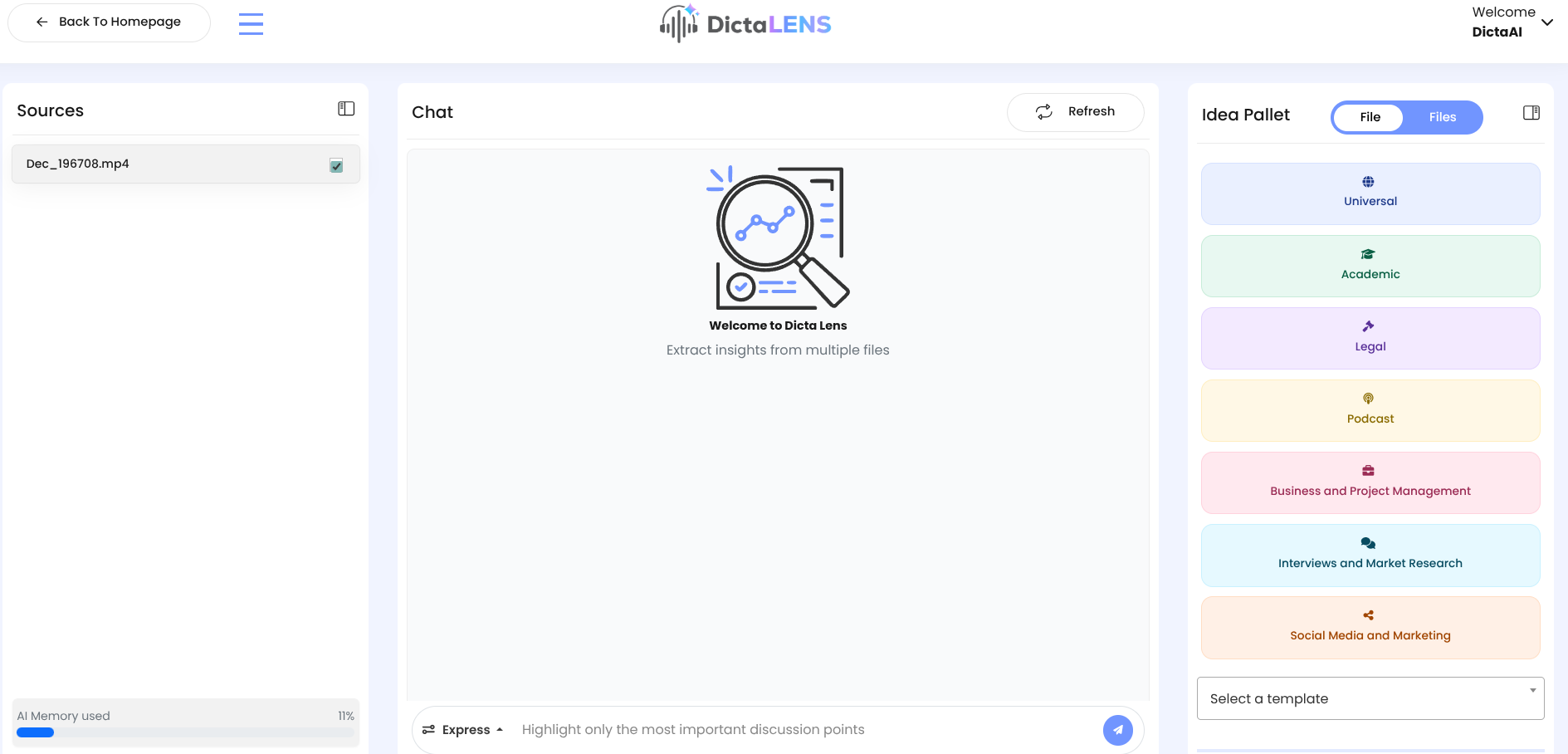
DictaAI is an AI-first transcription and conversation intelligence platform built for speed, scale, and real-world usability. It converts audio and video into clean, searchable transcripts and extends far beyond basic speech-to-text.
At its core is DictaLens, DictaAI’s proprietary AI analysis engine that transforms conversations into structured insights. Instead of producing raw transcripts alone, DictaAI delivers summaries, topics, trends, and actionable outputs that teams can immediately use.The platform supports multiple import methods, uploading files directly, or pulling recordings from cloud storage like Dropbox, Google Drive, and OneDrive, making it flexible for varied workflows.
Key Features & Advantages
This positions DictaAI as both an AI transcription tool and a productivity platform.
Ideal Use Cases
DictaAI is particularly well suited for teams that require fast, searchable transcripts with supplementary insights, such as:
Where DictaAI Is Not Ideal
While DictaAI supports human review, its primary architecture is optimized for AI-first workflows. Projects demanding 100% human transcription from the onset (e.g., legally binding records) may require traditional human transcription providers.
Also Read: Why DictaAI Outperforms Zoom as an AI Transcription Tool for Serious Teams
GMR Transcription is a veteran, human-only transcription service based in the United States, focused on delivering highly accurate transcripts through experienced, US-based transcriptionists since 2004. The company emphasizes precision, confidentiality, contextual understanding, industry expertise, and custom-formatting for professional needs. GMR Transcription's defining characteristic is its pure human transcription model: every file is transcribed manually by trained professionals, no automated speech recognition tools are used in the transcription process. This approach allows GMR Transcription to offer a 99% accuracy guarantee for good-quality audio, with rigorous internal quality checks and proofreading steps to ensure consistency.
Key Features & Advantages
Ideal Use Cases
GMR Transcription’s human-only model is best for contexts where accuracy, nuance, and confidentiality matter most, such as:
Trade-Offs
Because every transcript is crafted by human professionals, turnaround times are longer and service costs are higher compared with AI-only or hybrid platforms. These trade-offs are often acceptable, or even expected, for work requiring rigorous precision.
Rev is one of the most widely recognized names in the transcription industry, offering both AI transcription and human transcription services under a single platform. Its hybrid model allows users to choose between fast, automated transcripts and higher-accuracy human-reviewed options depending on budget and urgency. Rev is especially popular for media transcription, captions, podcasts, and general business use, where speed and accessibility often matter more than perfect precision.
That said, accuracy can vary significantly based on the selected service tier. AI-only transcripts may require manual cleanup for professional use, while human transcription comes at a higher cost and longer turnaround. Rev works well for teams seeking flexibility and brand familiarity, but it may not be the best fit for high-stakes legal, research, or compliance-driven transcription needs where consistency and deep contextual accuracy are critical.
GoTranscript positions itself as a cost-focused human transcription service, appealing to users who prefer human transcription over AI but need to manage tight budgets. The company offers transcription across multiple industries and supports a wide range of audio and video formats. For straightforward recordings with clear audio and minimal technical language, GoTranscript can deliver acceptable results at competitive pricing.
However, quality may vary depending on project complexity. Transcripts involving heavy accents, poor audio quality, or specialized terminology often require additional review. GoTranscript is best suited for basic interviews, lectures, and internal documentation where perfect accuracy is not mission-critical. Teams working on legal, medical, or research-heavy content may need stronger quality assurance processes than what a cost-driven model typically provides.
TranscribeMe operates on a hybrid transcription model that combines AI automation with structured human review. It is commonly used in research, enterprise, and qualitative analysis environments where consistency and scalability matter. One of TranscribeMe’s strongest differentiators is its project management framework, which allows organizations to handle large transcription volumes while maintaining standardized workflows.
The platform performs well for interview-based research, focus groups, and enterprise documentation that require uniform formatting and predictable output. While it may not deliver instant turnaround like AI-first transcription tools, its layered review process improves reliability compared to AI-only solutions. TranscribeMe is a solid option for teams that need structured transcription at scale but are willing to trade some speed for improved accuracy and organizational control.
Scribie offers human-assisted transcription services primarily focused on interviews, meetings, and basic business recordings. Its model emphasizes affordability and simplicity, making it accessible for users with modest transcription needs. Scribie works best when audio quality is clear and speaker count is limited.
For more complex workflows, Scribie’s limitations become noticeable. Projects involving technical language, multiple speakers, or noisy recordings may require additional editing. Scribie is generally better suited for straightforward use cases rather than professional environments where transcripts are used for decision-making, compliance, or publication. As a result, it serves individuals and small teams well but may struggle to meet the demands of enterprise-level or accuracy-sensitive transcription projects.
Sonix is an AI transcription software widely used by content creators, podcasters, and marketing teams. It emphasizes ease of use, fast turnaround, and strong in-browser editing tools rather than raw transcription accuracy. Sonix excels at helping users clean up AI-generated transcripts quickly through search, highlight, and text-editing features.
While Sonix performs well for content repurposing and media workflows, its AI-only approach means transcripts may lack contextual precision for professional or regulated use cases. Speaker attribution and nuanced terminology often require manual correction. Sonix is a good choice for creative teams prioritizing speed and workflow efficiency, but it may fall short for legal, research, or compliance-heavy transcription needs where accuracy and accountability matter more than convenience.
Verbit combines AI transcription with professional human review and primarily serves enterprise, education, and compliance-driven markets. Its platform is designed to handle high-volume transcription while meeting accessibility and regulatory requirements, particularly in academic and institutional settings. Verbit’s strength lies in scale, standardized processes, and compliance readiness.
The platform performs well for lecture transcription, training materials, and enterprise documentation that require consistency and auditability. However, its enterprise focus may make it less accessible for small teams or individuals seeking flexible, low-cost solutions. Verbit is best suited for organizations that need transcription integrated into larger systems and workflows, rather than standalone or ad-hoc transcription projects.
Happy Scribe offers AI transcription with optional human editing and strong multilingual support, making it popular for international content workflows. It supports a wide range of languages and accents, which is a key advantage for global teams and media organizations. Users can choose between fast AI-generated transcripts or upgraded human-edited versions for improved accuracy.
While Happy Scribe is versatile, AI-generated transcripts still require review for professional use, especially in technical or formal contexts. Human editing improves output quality but increases cost and turnaround time. Happy Scribe is well suited for multilingual content creation, subtitles, and general transcription needs, but it may not be the best choice for legal or research settings that demand strict accuracy standards.
Temi is a low-cost AI transcription tool known for fast turnaround and simplicity. It is designed for users who need quick, inexpensive transcripts without advanced features or deep accuracy requirements. Temi works best for clear audio with minimal background noise and limited speaker overlap.
However, its AI-only approach limits its professional applicability. Transcripts often require manual correction, and the platform lacks advanced quality control or analysis capabilities. Temi is suitable for personal notes, rough drafts, and basic internal use, but it is not ideal for business-critical, legal, or research transcription where errors can create downstream risk.
Also Read: The Hidden Costs of Cheap AI Transcription Tools: Why Quality Matters
AI transcription services excel when speed matters more than precision. They work well for internal notes, brainstorming sessions, and early-stage content drafts.
Human transcription services remain essential when accuracy is non-negotiable. Legal records, research interviews, and compliance documentation require human judgment.
The hidden cost of AI transcription is correction time. Many teams adopt AI early and bring in human review later, creating a hybrid workflow that balances efficiency and trust.
Choosing the right transcription service starts with how the transcript will be used. Not all transcripts carry the same risk, and accuracy requirements change based on the consequences of an error.
Key factors to consider include:
There is no universal “best” transcription service in 2026. The right choice depends on context, risk, and how the transcript will be used after it is delivered.
AI transcription tools are built for speed, scale, and accessibility. They help teams move quickly, capture conversations in real time, and keep information searchable. Human transcription services, on the other hand, are designed for trust, accuracy, and accountability, making them essential when precision is non-negotiable.
The deciding factor is simple: what happens if the transcript is wrong? When errors carry consequences, slowing down is often the smarter move. When speed and momentum matter more, moving fast can be a competitive advantage.
In many modern workflows, the most effective approach is knowing when to do both.
If you want to experience a fast, AI-first transcription service that goes beyond basic speech-to-text and helps uncover deeper value from conversations through features like auto chapters, structured analysis, and insight extraction, DictaAI is worth exploring. It is built for teams that need quick transcripts while also wanting to understand conversations, not just record them.

Comments
Glynnis Campbell
This is a test comment!